

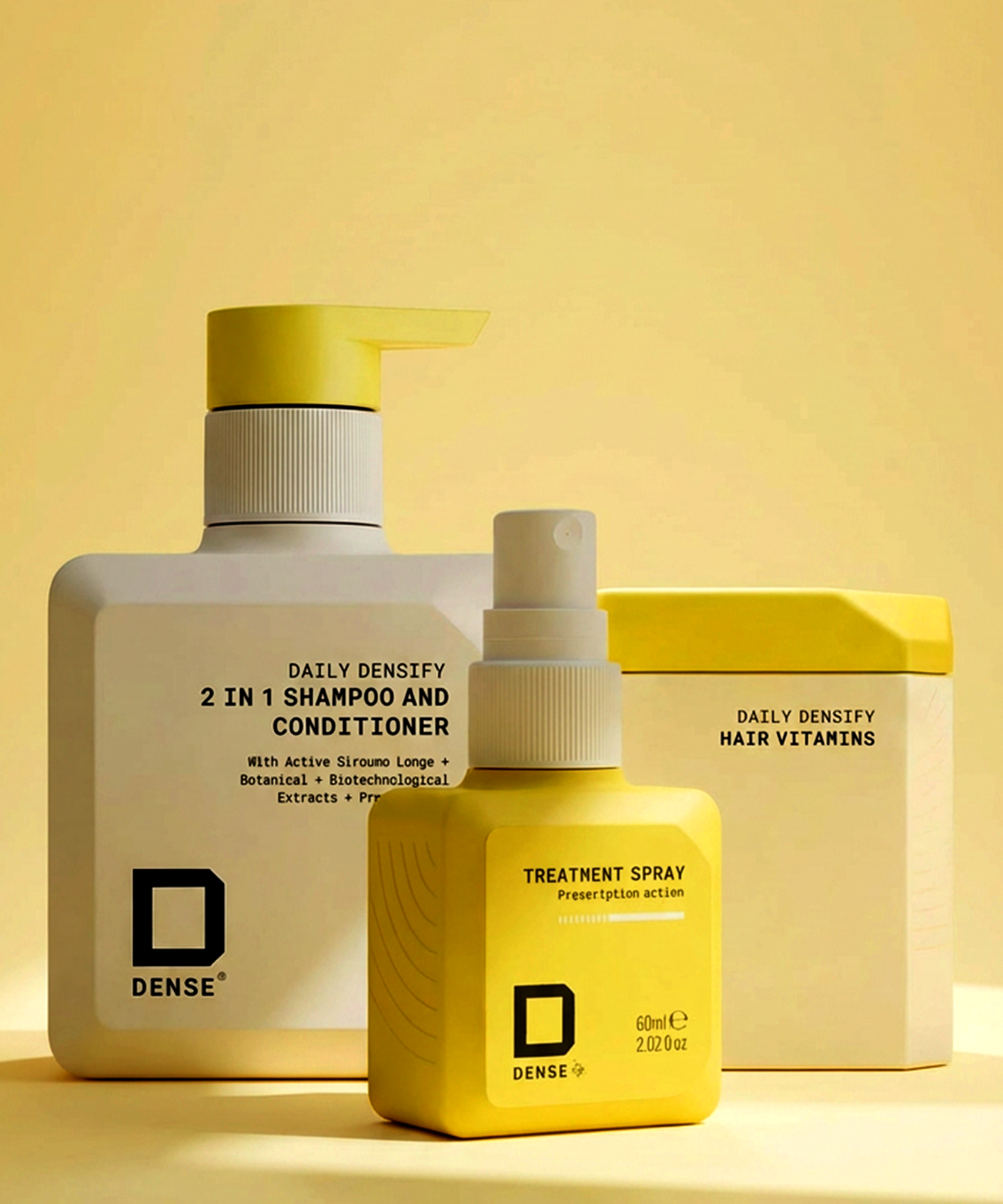
The science behind hair loss treatments centres on understanding the hair growth cycle, the biological factors that can disrupt it, and the ingredients and approaches that research has associated with supporting normal, healthy hair. It is a genuinely fascinating area, and once you understand the basics, the choices in front of you start to make a lot more sense.
How does hair actually grow?
Every single hair on your head goes through a cycle made up of three main phases. The anagen phase is the active growth period, which can last anywhere from two to seven years. After that comes catagen, a short transitional phase lasting a couple of weeks, and then telogen, a resting phase of around three months before the hair sheds and the cycle starts again.
At any given moment, around 85 to 90 per cent of your hairs are in the anagen phase, according to research published in dermatology literature. When something disrupts this cycle, whether that is a hormonal shift, a nutritional gap, or chronic stress, more hairs can enter the shedding phase earlier than they should. That is when you start noticing more hair in the shower or on your brush.
What are the main biological causes of hair thinning?
Androgens and the follicle
The most widely studied cause of progressive hair thinning in both men and women is androgenetic alopecia, sometimes called pattern hair loss. It involves a hormone called dihydrotestosterone, or DHT, which is derived from testosterone via an enzyme called 5-alpha reductase. In people who are genetically predisposed, DHT binds to receptors in the hair follicle and gradually shortens the anagen phase, causing the follicle to miniaturise over time and produce finer, shorter hairs.
This is why so much of the research into hair care ingredients focuses on 5-alpha reductase activity. Ingredients like Saw Palmetto and Pumpkin Seed Oil have been studied for their role in this pathway, and both appear in well-formulated supplements for this reason.
Nutritional deficiencies
Hair follicles are among the most metabolically active structures in the body, which means they are sensitive to nutritional shortfalls. Iron deficiency is one of the most commonly identified contributors to diffuse hair shedding, particularly in women of reproductive age. Zinc, Biotin, and B vitamins including B3 (Niacin) and B5 (Pantothenic Acid) all play recognised roles in normal hair growth, as acknowledged by the European Food Safety Authority (EFSA).
EFSA has authorised specific health claims linking Biotin, Zinc, and Iron to the maintenance of normal hair. These are not marketing phrases; they are claims that have passed a rigorous scientific evaluation process. That distinction matters when you are trying to work out which supplements are worth taking seriously.
Scalp health and inflammation
The scalp is skin, and like all skin it can become imbalanced. An overgrowth of a yeast called Malassezia is associated with seborrhoeic dermatitis and dandruff, both of which can create a low-grade inflammatory environment around the follicle. Chronic scalp inflammation is not a friend to healthy hair growth, which is why scalp-balancing topicals are a meaningful part of a well-rounded hair-care approach rather than just a cosmetic nicety.
What does the research say about key hair-care ingredients?
Saw Palmetto
Saw Palmetto is a botanical extract derived from the berries of Serenoa repens. It has been studied for its potential to inhibit 5-alpha reductase activity, the same enzyme involved in DHT production. A review published in the journal Skin Appendage Disorders in 2020 found that Saw Palmetto was associated with improvements in hair density in a number of studies, though researchers note that larger, longer trials are still needed. It is one of the more credible plant-based options in the hair supplement space.
Pumpkin Seed Oil
Pumpkin Seed Oil has also attracted research interest for its potential role in the same hormonal pathway. A double-blind, placebo-controlled study published in Evidence-Based Complementary and Alternative Medicine in 2014 found that men taking Pumpkin Seed Oil over 24 weeks had a higher mean hair count compared to those taking a placebo. It is a promising finding, though as with most botanical research, replication in larger studies would strengthen the evidence base further.
Panax Ginseng
Panax Ginseng, sometimes called Korean Ginseng, contains active compounds called ginsenosides that have been studied for their potential to support hair follicle activity. Laboratory and animal studies have suggested ginsenosides may play a role in promoting the anagen phase of the hair cycle. Human evidence is still building, but it is a well-regarded ingredient with a long history of use in hair-care formulations.
Curcuma (Turmeric)
Curcuma longa, the plant that gives us turmeric, contains curcumin, a compound with well-documented antioxidant and anti-inflammatory properties. When applied topically to the scalp, it may help support a calmer, more balanced scalp environment. It is increasingly appearing in evidence-informed topical formulations for this reason.
Arginine
Arginine is an amino acid that the body uses to produce nitric oxide, a molecule that supports healthy blood vessel function. Good circulation to the scalp is important for delivering the nutrients that follicles need. Topical Arginine is used in hair-care products to help support scalp circulation and to improve the condition of the hair shaft itself.
Microneedling and the scalp
Microneedling, or collagen induction therapy, involves creating tiny, controlled micro-channels in the skin using fine needles. On the scalp, this mechanical process is thought to stimulate growth factors and improve the absorption of topically applied ingredients. A study published in the International Journal of Trichology found that microneedling was associated with improved hair density outcomes when used alongside other approaches. It is a technique that has moved from clinical settings into at-home devices, and when used correctly and consistently, it is a meaningful addition to a scalp-care routine.
How do prescription options fit into the picture?
For some people, evidence-based supplements and topicals form a complete and satisfying routine. For others, particularly those with more pronounced or progressive thinning, pharmacist-led or clinically supervised options may be appropriate. The UK has a small number of medicines that have been through regulatory approval processes for use in hair-related conditions, and these sit in a different category to supplements and cosmetics entirely.
Because these are prescription-only medicines, it would not be appropriate to discuss or advertise specific products here. What is worth knowing is that having a pharmacy involved in your hair-care plan means those options can be assessed and discussed properly, by a qualified professional, in the context of your individual history. That is a meaningful advantage over buying supplements from a general retailer with no clinical oversight.
Why a system matters more than a single product
One of the most consistent findings across hair-care research is that no single ingredient or product works in isolation. The hair growth cycle is influenced by hormonal factors, nutritional status, scalp health, circulation, stress, and genetics, often all at once. A shampoo alone cannot address a nutritional gap. A supplement alone cannot improve a congested, inflamed scalp. These things work together, which is why the most thoughtful approaches to hair care treat it as a system rather than a single fix.
This is the thinking behind how Dense Hair Experts is built. The Dense Complete Plan combines a daily supplement formulated around named, researched actives (including Saw Palmetto, Pumpkin Seed, Panax Ginseng, Biotin, Zinc, Iron, and B vitamins), scalp-balancing topicals built around ingredients like Curcuma, Arginine, and B3/B5, and a microneedling device, all designed to work together. Because Dense has a pharmacy behind it, the plan can also include pharmacist-led prescription options where clinically appropriate, which is genuinely unusual in the direct-to-consumer hair-care space.
If you would like a routine built around your specific hair history rather than a generic off-the-shelf approach, the Dense Personalised Hair Formulation Service is a pharmacist-led assessment that does exactly that.
What should you actually look for in a hair supplement?
The supplement market is crowded and, frankly, inconsistent. Here are a few things worth checking before you commit to anything. First, look for ingredients with EFSA-authorised health claims for hair, specifically Biotin, Zinc, and Iron, as these have passed independent scientific scrutiny. Second, look for botanicals that appear in peer-reviewed research, not just on trend ingredient lists. Third, check the doses: an ingredient present at a trace level is unlikely to do much.
Avoid products that make dramatic claims about regrowing hair or reversing loss. These claims are not only scientifically overstated, they are also not permitted under UK advertising rules for good reason. The honest, evidence-grounded language is about supporting normal hair, nourishing the follicle, and maintaining what you have. That is where the real science sits.
All prescribed medicine is subject to a consultation with a healthcare professional.


Leave a comment
This site is protected by hCaptcha and the hCaptcha Privacy Policy and Terms of Service apply.